
Choose the Right Lisle Residents Directory Trail
A useful Lisle search starts by matching the question to the record. The DuPage County Property Records Search is strongest when the clue is a street address, owner, billing name, parcel identification number, or point on a map. The Recorder of Deeds adds recorded parties and instruments. The Election Division has identity and address routes for voter registration. The Village publishes staff contacts, meeting documents, permits, licenses, cemetery information, and Freedom of Information Act access. Historical names lead instead to the Lisle Library District, regional museums, or Illinois archives.
No one source proves an entire household. A parcel card concerns ownership and tax administration, while a deed identifies parties to an instrument. Voter registration covers registered voters, not every person at an address. Printed directories and newspapers can place a name in an earlier period, but they do not establish a present address. Treat each result as one piece in an evidence chain.
- Search the county property roll by address, PIN, billing name, or map.
- Use the DuPage voter search only for the registration question its form asks.
- Check Recorder documents by party, address, PIN, or document number within the available date ranges.
- For an older trail, consult directory volumes, newspaper microfilm, census tools, and archive indexes.
- When an online portal stops short, call the custodian, visit its counter, or send a focused Illinois FOIA request.
The Wheaton Offices Behind Lisle Resident Records
Most county-level Lisle records are kept in Wheaton. The Recorder of Deeds and County Clerk share the county complex at 421 N County Farm Road, while the Circuit Clerk is at 505 N County Farm Road. The Recorder handles deeds, plats, liens, and related instruments. The County Clerk handles elections, vital certificates, assumed names, and statements of economic interests. The Circuit Clerk keeps DuPage trial-court files. Property search and GIS tools supply parcel and address context. For a full street-by-street method, use the Lisle street directory.
DuPage County Recorder of Deeds
421 N County Farm Road
Wheaton, IL 60187
630-407-5400
DuPage County Property Records
County property and GIS systems
Wheaton, IL
gis@dupageco.org
DuPage County Election Division
421 N County Farm Road, Room 1-600
Wheaton, IL 60187
630-407-5600
Find the DuPage PIN Before Following a Lisle Name
The parcel identification number is the stable join between several address records. DuPage property data distinguishes the property, or situs, address from the billing address. That matters because the person receiving a tax bill may use a different mailing address, and the owner named on the card may not be an occupant. Start with the exact street location, open its PIN link, and record the tax year and legal description before moving to deeds or maps.
Four useful record terms
Roll: a list kept for an official function. Index: a finding aid that points to a document. Parcel: a mapped unit of land identified by PIN. Criss-cross directory: a printed directory arranged by address or phone rather than only by surname.
The DuPage property records home shows the starting routes available to a researcher.
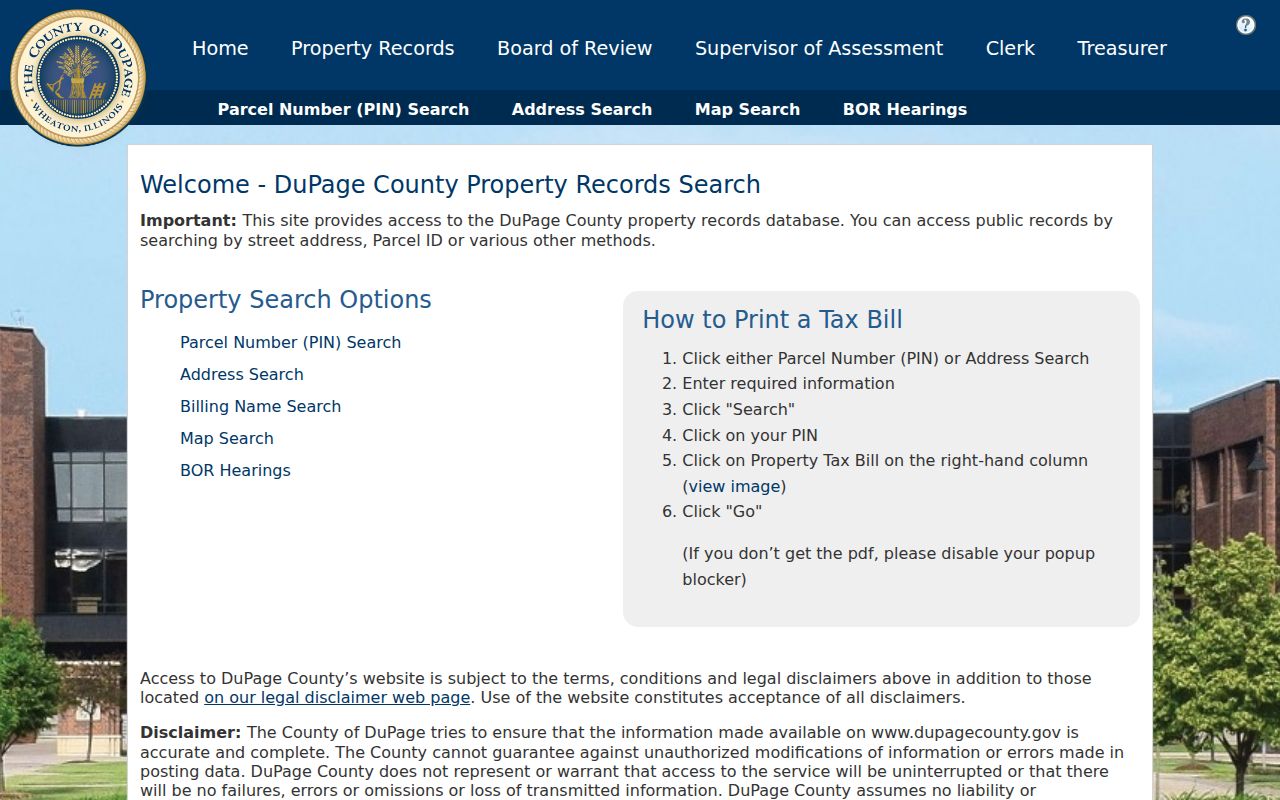
Its separate PIN, address, billing-name, map, and hearing routes show why one search box cannot answer every resident question.
Lisle Deed Images Start Later Than County Land Records
DuPage County dates to 1839, but the Recorder's current digital image and name-search period begins March 16, 1961. PIN searching is described from 1985 forward and address searching from 1995 forward. A blank address search for an older event therefore does not mean the instrument vanished. It means the search must move to a party name, legal description, prior deed reference, office terminal, or staff-assisted research route.
This gap is one of the most useful facts in the Lisle residents directory. The Recorder research line is 630-407-5401. Plats can reach into the 1800s, and office property research is described back to county origins. A researcher should note whether a result came from a name index, PIN index, address field, document image, or counter search.
The DuPage Recorder portal introduces the current online document system.
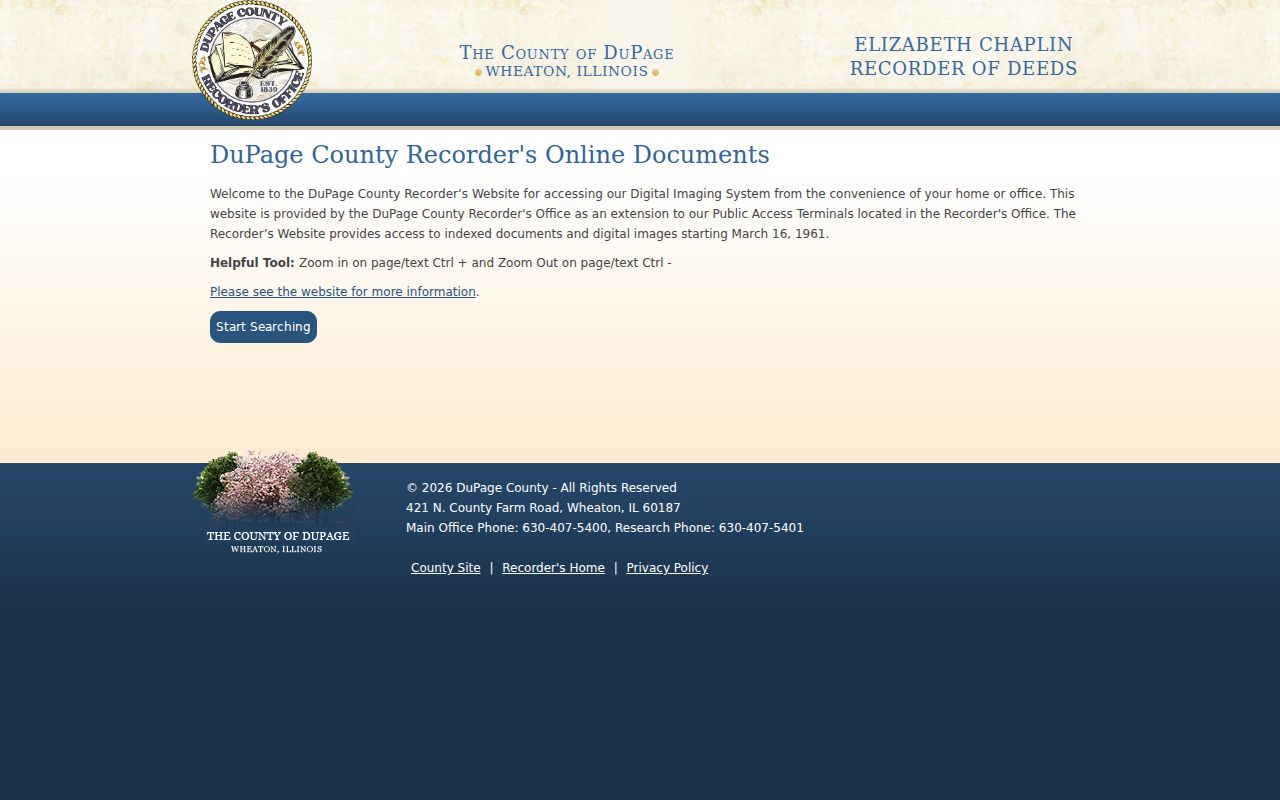
The portal is a strong recent-record route, while its stated cutover dates explain why historical work still needs the research desk.
Current Sources in the Lisle Residents Directory
Current directory-like sources cover defined groups rather than every Lisle resident. Their value comes from knowing why each roll exists. Property systems identify parcels and billing parties. Recorder indexes identify parties to recorded documents. Election tools confirm a registration through controlled inputs. Court indexes identify cases. Village reports identify public events or applicants, and state portals identify licensed professionals or business roles.
| Source | Who It Lists | Keeper | Access |
|---|---|---|---|
| Property Records Search | Owners and billing names tied to parcels | DuPage property system | Free portal |
| Voter Registration Search | Registered voters who satisfy form inputs | Election Division | Controlled public lookup |
| Online Documents | Parties to deeds, liens, plats, and other instruments | Recorder of Deeds | Index and images by coverage era |
| Village staff and public reports | Officials, staff, applicants, and public-event participants | Village of Lisle | Free pages or FOIA |
| SEI Public Search | Covered public filers | DuPage County Clerk | Search and CSV |
Choose the source by the claim you need to test. A name on a permit report identifies an applicant, not a full household. A filing in the SEI system shows a covered civic role. For the evidence-matching process used to verify one name, follow the Lisle resident lookup workflow.
What the DuPage Voter Search Can Verify in Lisle
The Election Division offers two controlled routes. The identity path uses first name, last name, date of birth, and either the last four digits of a Social Security number or an Illinois driver's-license or state-ID number. The address path uses house number, direction, street name, suffix, and district or information choices. These inputs help a person confirm a registration; they do not create an open download of every resident.
| Route | Inputs | Best use |
|---|---|---|
| Identity | Name, birth date, qualifying identifier | Confirm one's registration |
| Address | House number, direction, street, suffix, selector | Check an address-based registration route |
| Offline | Registration application and eligibility material | Apply or correct a registration |
The DuPage voter lookup is the official starting point.
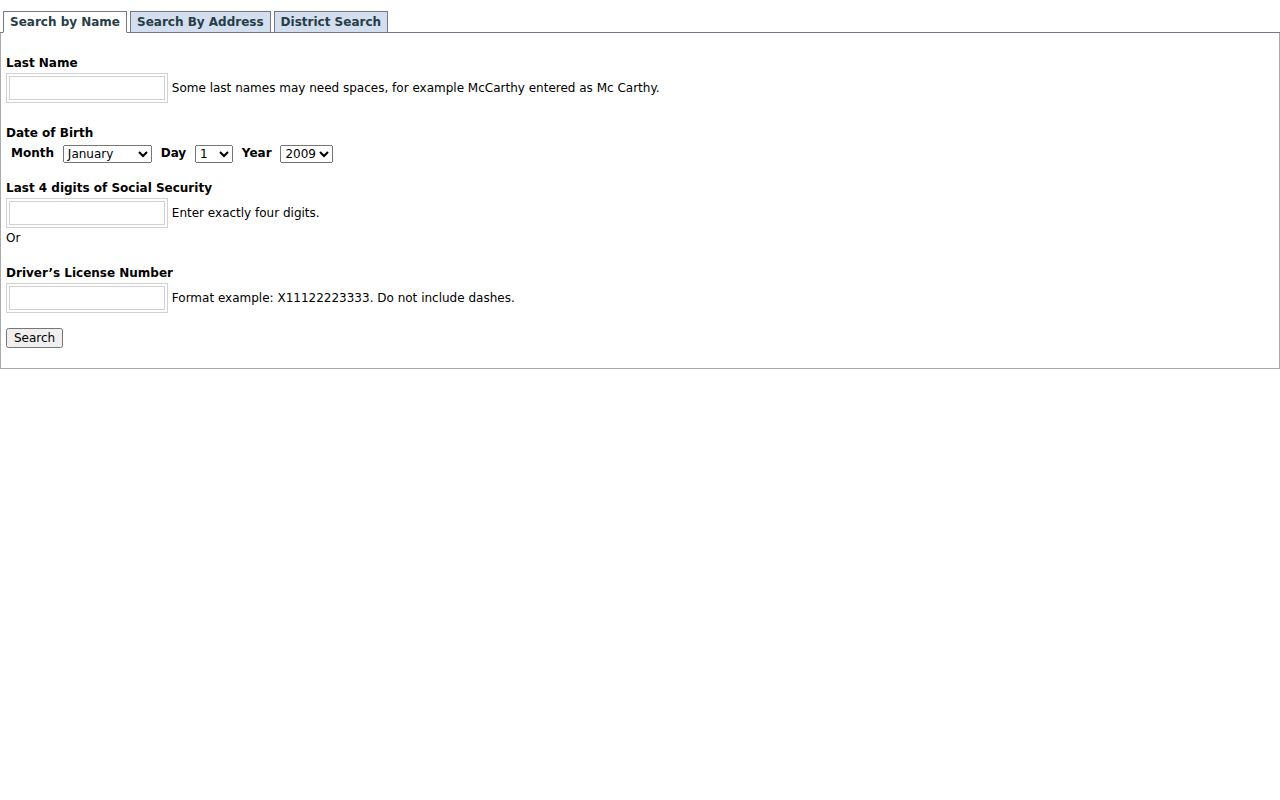
The form's controlled routes reinforce an important limit: voter data are regulated election records, not a general-purpose resident download.
Lisle Court Names Need a Case Number and Context
A court hit means a person or entity appears in a case record. It does not prove a current Lisle address. Start at the DuPage Circuit Clerk public portal for case status, the next date, and docket information. If the public page is gated, incomplete, or cannot display a needed document, use the courthouse terminals at 505 N County Farm Road during the published weekday hours of 8:00 a.m. to 4:30 p.m.
Nonsealed and nonimpounded records are open for inspection at the terminals. I2File is the online copy route after registration. The published schedule states $2 for the first page, $0.50 for pages two through twenty, $0.25 for later pages, and $6 for certification, subject to verification when ordered. CRIS is role-limited and excludes several protected case categories.
The DuPage Circuit Clerk page identifies the official trial-court custodian.
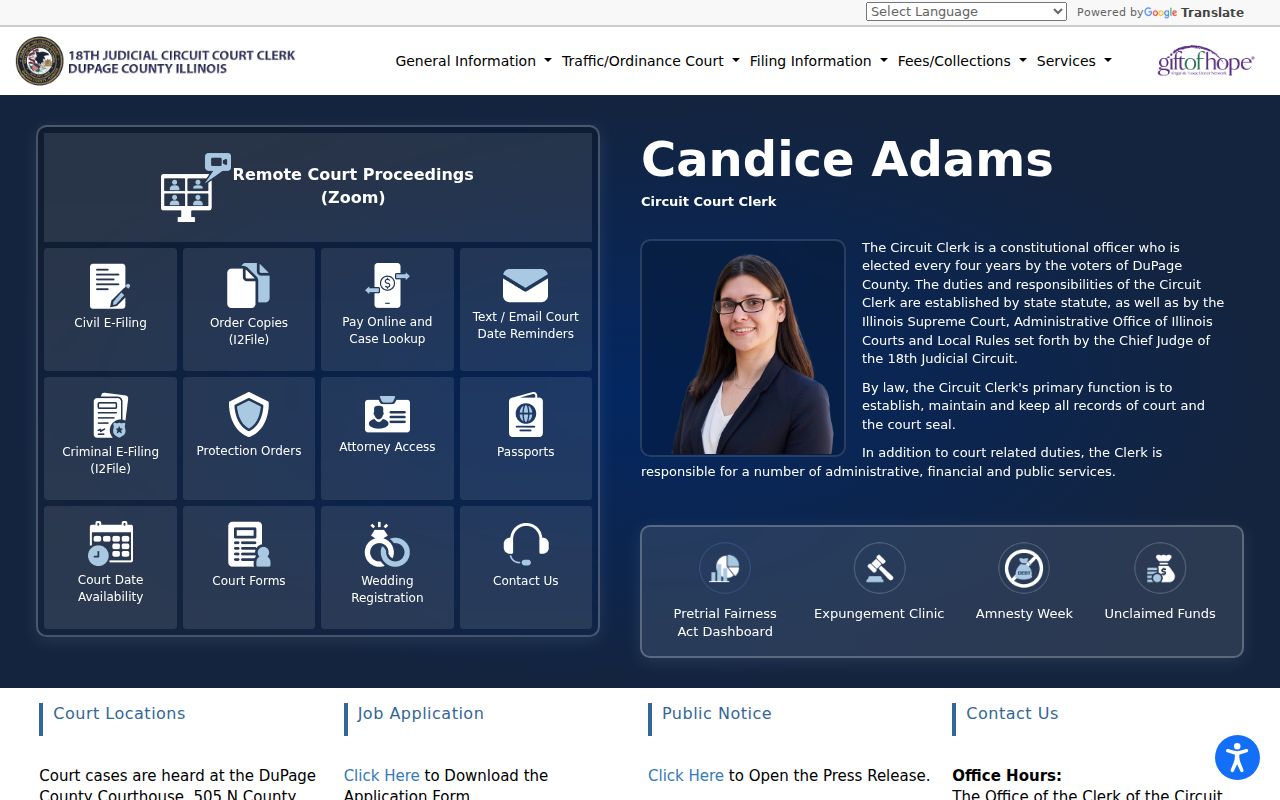
Use the court result to capture a case number and dates, then compare any identity claim against a second source.
Lisle Vital Records Follow Eligibility Rules
The DuPage County Clerk issues local certified birth, death, marriage, and civil-union records. Illinois Department of Public Health supplies statewide verification or application routes, while the Illinois State Archives and IRAD serve older genealogical material. These channels are not interchangeable. A FOIA request cannot override certificate eligibility, sealed status, identification requirements, or proof of a personal or property interest.
Research distinguishes genealogical proper-purpose access from archive reproduction thresholds. The noted genealogy periods are birth records at least 75 years old, death records at least 20 years old, and marriage records at least 75 years old. Public-inspection reproduction thresholds are described as birth 100 years, death 50 years, and marriage 75 years. Confirm the current form, proof, and fee with the issuing office.
Lisle Permit Reports Add Address Events, Not Occupants
Village Development Projects and Reports pages publish monthly and year-to-date permit material. The inspected 2025 issued-permit report contains record number, record type, applicant, address, status, PIN, and construction cost. Those fields can date a public event at a parcel and help match an address to a PIN. An applicant may be an owner, contractor, agent, or other participant, so the name should never be recast as proof of residence.
The Village GIS, meetings archive, and FOIA channels provide fallbacks when a report cannot answer the question. Lisle asks that electronic FOIA request text appear in the email or form body, not only in an attachment or link. Administrative requests go to 925 Burlington Avenue, 630-271-4162, or FOIARequest@villageoflisle.org. Police-record requests use the department route at 5040 Lincoln Avenue.
Official Lisle Rolls Versus Commercial Directory Data
Official records are narrower but easier to interpret. Each has a named custodian, a stated purpose, and a route for inspection or correction. Commercial directory data may merge older addresses, public filings, and other feeds without showing when a fact changed. It can be quick, but it should be treated as an unverified lead rather than evidence.
Official roll: best for a defined fact such as a parcel owner, recorded party, voter confirmation, case event, or credential status. Commercial category: may combine many clues, but dates, sources, and same-name matches can be unclear. In either route, verify with the office that holds the underlying record.
Lawful use only. Use Lisle resident records for legitimate personal, family-history, property, estate, civic, or safety research. Never use an address or name trail to stalk, harass, threaten, or harm anyone.
Historical Shelves for the Lisle Residents Directory
Lisle's confirmed directory trail is regional. Naper Settlement lists a 1923-24 Naperville, Lisle, and Eola volume and a 1924-25 DuPage County volume. Newberry Library holdings place Lisle under DuPage County for 1925 through 1928. The Illinois Digital Archives scan of the 1925-26 McDonough volume has 1,188 pages and includes city and rural sections. A person missing from a simple Lisle browse may be filed under DuPage County, Eola, Naperville, or a rural heading.
The Lisle Library District adds Lisle Sun microfilm back to the 1940s, HeritageQuest for remote cardholder use, and Ancestry Library Edition in the library. DuPage County Historical Museum has city directories, maps, platbooks, newspapers, vertical files, and mid-century real-estate material. Naper Settlement and IRAD fill additional gaps. The full collection and reading method belongs on the Lisle city directory page.
Lisle Cemetery Names Open a Deeper Family Trail
The Village describes Lisle Cemetery as one of the oldest registered cemeteries in DuPage County and Illinois. Its page names five early settlers: Luther Hatch, James Crombie Hatch, A.B. Chatfield, John Graves, and George Willard. That small official list is unusually useful because it gives exact surnames for a place-based search across land indexes, census material, directories, newspapers, and archive collections.
The inspected Village page does not supply a searchable burial index. The honest next step is a call to the Village or cemetery contact, followed by a check of IRAD land material, county histories, and newspaper microfilm. A cemetery reference is a clue to death and family history, not a substitute for a death certificate or a complete household roll.
The Lisle Library local-history page shows the community collections that can carry such a name beyond the online portals.

Library staff can help identify the right reel, shelf, database, spelling variant, or neighboring place label for the next search.
Recent Lisle Record Changes Need a Date Stamp
Several systems changed in 2025 and 2026. The Recorder search displayed an August 14, 2026 effective date. DuPage's new statements-of-economic-interests system showed filer, agency, question, report, and CSV routes in August 2026. Lisle changed its business and occupancy rules on May 1, 2026, ending a general business-registration requirement while keeping occupancy permits and certain license duties. Illinois also expanded access for qualifying nonconfidential reviewing-court documents filed from April 1, 2025.
These changes make the access date part of the citation. Save the portal name, result date, record year, and document or PIN identifier. If a current screen conflicts with an older guide, call the keeper before relying on a field, fee, or access rule. The best Lisle residents directory search is not merely accurate about a name; it is clear about which system, date, and public function produced the name.